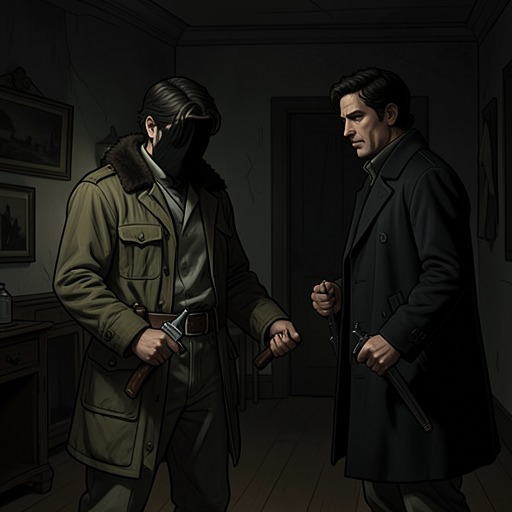
A Witch Doctor Turns Murdered Peasants into Zombie Laborers
Kiss of the Spider WomanA Witch Doctor Turns Murdered Peasants into Zombie Laborers is the hidden history at the center of a film story told in the novel: a plantation owner conspires with a witch doctor to suppress a laborers’ rebellion, then uses the murdered workers as unpaid night labor. Recounted by Butler / maquis leader to a young woman, the episode reveals that the husband’s family fortune rests on violence and that his childhood was marked by knowledge of the crime. Its horror is inseparable from its account of exploitation: the workers are deprived of both their lives and their capacity to refuse work.
The Legend and the Rebellion
The account first reaches the young woman as a frightening legend about Zombies. Butler / maquis leader explains that witch doctors can revive people they have killed with a specially prepared poison, leaving them without independent will and subject to the witch doctor’s orders. In the story’s terms, zombification is not simply a return from death; it is a condition in which a person remains capable of labor but cannot choose, speak, or resist. The legend makes the loss of agency its central terror.
The victims are plantation laborers who have organized to rebel against owners paying them very little. Rather than answer their demands, the plantation owners enlist the island’s chief witch doctor. The political conflict therefore proceeds by an alliance between economic power and supernatural authority: the workers’ attempt to organize is met not with negotiation but with a plan to eliminate them and make their labor continue under coercion. Their work harvesting bananas becomes the means by which the owners profit from the very people they have silenced.
The Ambush and Forced Labor
In the fuller account, the witch doctor summons the rebel leaders to a meeting, presenting it as an occasion to give them his blessing. It is instead an ambush arranged with the plantation owner. The leaders are killed with arrows treated with the witch doctor’s poison, and their bodies are taken into the jungle. A few hours later, they rise as Zombies under his command. This sequence turns a gathering associated with the rebels’ cause into the trap that defeats it, while the revival makes the violence serve the owners beyond the moment of the killings.
The witch doctor orders the newly revived workers to take machetes and march to the banana groves. They are made to cut and harvest bananas throughout the night. Their labor is hidden from the other plantation workers: the owner has small huts built from dried cane stalks so the Zombies can be kept out of sight during the day, crowded together inside until they are needed again. The schedule and concealment show how the supernatural premise is integrated into an organized system of production. The victims work silently, and the story emphasizes that their apparent obedience does not mean they are free of suffering; they have lost the power to express or act on their own will.
The Family Secret and Its Consequences
The later telling identifies the plantation owner as the husband’s father. As a child, the husband witnessed the killings, the Zombies’ revival, and their forced labor. His father’s role was not incidental: he arranged the alliance with the witch doctor and used the system to accumulate a vast fortune. The secret thus changes the meaning of the husband’s inheritance, connecting his family’s wealth to the exploitation of murdered workers and making his childhood knowledge part of the story’s moral burden.
The husband grows up and later marries; the account mentions both his first wife and the brunette leading lady he marries afterward. After his father dies, he decides to end the arrangement with the witch doctor and sends for him. The available telling stops as that effort is being set in motion, so it does not establish what happens next or whether the Zombies are freed. The unresolved action keeps the focus on the revelation itself: the husband has inherited not only wealth but a system whose origins he witnessed as a boy.
Narrative and Thematic Significance
The episode unfolds through nested narration. Molina describes the film, while Butler / maquis leader recounts its history to the young woman; the account consequently arrives as both a suspenseful disclosure and an explanation of the plantation’s past. The initial legend prepares the listener for the more specific family secret, moving from a general account of Zombies to the husband’s personal connection to the crime. The revelation is not an unrelated supernatural tale: it supplies the cause of the family fortune and clarifies why the husband’s past is burdened by what he saw.
The Zombies’ condition gives the story a stark image of labor stripped of choice. The plantation owners first respond to the workers’ collective resistance by killing them, then continue to extract their work while concealing them from the living workforce. The account’s night harvest and daytime hiding make exploitation both productive and secret. By linking the fantastic transformation to low wages, organized resistance, and the accumulation of wealth, the episode makes its central horror legible as a social relation: the workers are denied the ability to act for themselves and made to serve the interests of those who already possess power.